

Table of Contents
Who to Call for Water Heater Repair in Mount Pleasant, SC
If your water heater stops working, starts leaking, or no longer gives you enough hot water, the right person to call is a plumber who regularly works on water heaters. Experienced water heater repair professionals can inspect the unit, find the cause of the problem, and explain whether a repair or replacement makes more sense.
Hot water matters year-round in this area, even with the generally mild winters in Mount Pleasant, SC. The National Weather Service describes the Charleston area as warm and humid for much of the year, with mild winters. Since water heaters work year-round, it is worth keeping an eye out for small leaks, moisture, or changes in performance before they turn into a bigger inconvenience.
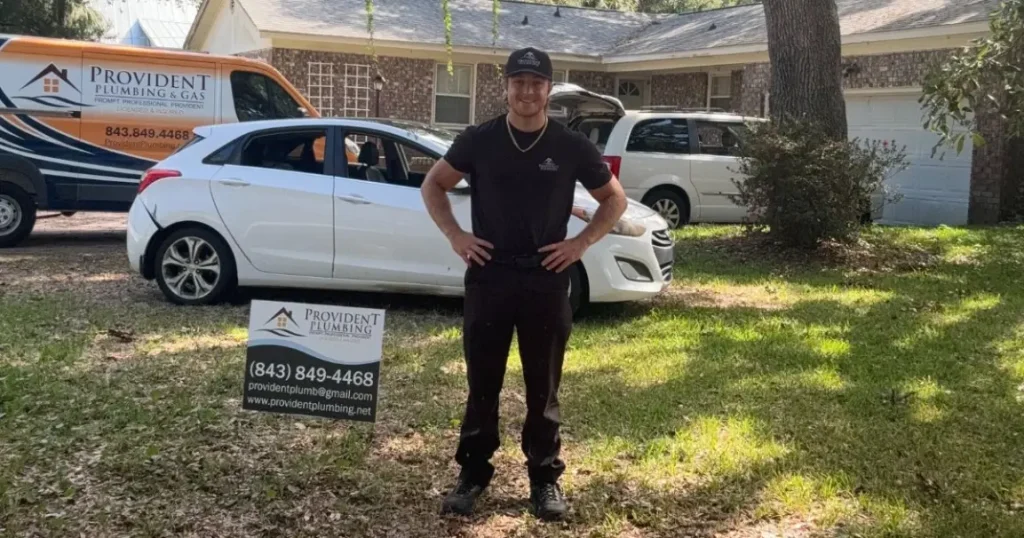
Who to Call for Water Heater Repair
For most water heater problems, call a plumber with experience diagnosing and repairing water heating systems. Water heaters connect to other parts of your home’s plumbing and may also involve electricity, gas, venting, pressure, valves, and drainage.
A plumber who knows how to repair water heaters can look beyond the obvious symptom. That matters because “no hot water” or “water around the tank” tells you there is a problem, but it does not tell you what actually failed.
Water Heater Problem | Who to Call |
No hot water | Plumber |
Water leaking around the unit | Plumber |
Rust or corrosion | Plumber |
Water is too hot or too cold | Plumber |
Unusual banging or rumbling | Plumber |
Pilot or ignition problem | Plumber experienced with gas units |
Breaker repeatedly trips | Plumber or electrician, depending on the cause |
Storage tank itself is leaking | Plumber |
If you smell gas or suspect an immediate gas leak, leave the area and follow your gas utility’s emergency instructions instead of trying to diagnose the heater yourself.
What Water Heater Repair Professionals Should Check
A proper diagnosis starts with identifying where the problem is coming from. Replacing a part without confirming the cause can waste money and may leave the real issue unresolved.
Depending on the type of unit and the symptoms, an inspection may include checking:
- The age and overall condition of the water heater
- Visible leaks or corrosion
- Water supply and outlet connections
- Valves and fittings
- Heating elements on electric models
- Thermostats and controls
- Ignition components on gas models
- Signs of sediment buildup
- The condition of the storage tank
The EPA recommends regularly checking water heaters for leaks, loose connections, worn gaskets, and corrosion. Finding the source matters because a leaking connection may be repairable, while a deteriorated storage tank can point toward replacement.
Signs You May Need Water Heater Repair Services
A water heater does not have to stop working completely before it needs attention. Changes in performance can sometimes give you an early warning that a component is starting to fail.
Consider scheduling water heater repair services if you notice:
- Hot water runs out faster than it used to
- Water takes longer to heat
- The temperature changes unexpectedly
- Water or moisture appears around the heater
- Rust develops around fittings or connections
- The unit makes unusual popping or rumbling sounds
- A pilot light will not stay lit
- An electric unit repeatedly loses power
- Water suddenly develops an unusual appearance or smell
None of these symptoms automatically means you need a new water heater. The failed component, condition of the tank, age of the system, and previous repair history all help determine what should happen next.
Why a Small Water Heater Leak Should Be Checked
Water around a heater can come from several places, including a valve, fitting, nearby pipe, or the tank itself. That is why the source should be identified instead of assuming a small amount of water is harmless.
The EPA warns that household leaks can waste water and cause serious damage in a home. When a water heater is involved, addressing the problem early may give you more repair options and reduce the chance of water damaging floors, walls, or nearby belongings.

Should the Water Heater Be Repaired or Replaced?
Not every problem requires replacement. Repair can make sense when the tank remains in good condition, and a serviceable component is responsible for the problem. Replacement becomes more reasonable when the tank itself is leaking, corrosion is significant, or the unit has required several recent repairs.
Repair May Make Sense | Replacement May Make Sense |
One repairable component has failed | The storage tank itself is leaking |
Unit has otherwise been reliable | Significant corrosion is present |
Tank remains in good condition | Repairs have become frequent |
Problem involves a valve, control, or element | Unit no longer meets hot-water needs |
Repair is reasonable for the unit’s condition | Another repair may only delay failure |
Age also provides useful context, but it should not be the only factor. Two water heaters of the same age can be in very different condition, so the decision should be based on what has actually failed and the overall state of the system.
What to Tell the Plumber When You Call
You don’t need to diagnose the problem before scheduling service. A few simple observations can still help describe what is happening and may make the service visit more efficient.
Try to note:
- Whether you have any hot water at all
- Whether the problem started suddenly or gradually
- Where you see water if there is a leak
- Whether your heater is gas, electric, tank, or tankless
- Any unusual noises or smells
- Whether a breaker has tripped
- Any error code displayed on the unit
- The approximate age of the heater, if known
Do not remove covers or disconnect gas, electrical, or plumbing connections just to gather this information. Basic observations are enough for the initial call.
Does Regular Water Heater Maintenance Matter?
Regular maintenance can help you spot wear, leaks, and other developing problems before they become larger issues. The exact maintenance schedule depends on the type of water heater and the manufacturer’s instructions.
The EPA recommends having a certified expert service your home’s water heater at least once a year so the system can be checked for potential problems. It also recommends checking for corrosion and leaks and following appropriate maintenance procedures for the unit.
Get Clear Answers About Your Water Heater
When your hot water stops working, the most useful first step is finding out what actually failed. A professional inspection can tell you whether you are dealing with a repairable component, a plumbing connection problem, or a water heater that is better replaced.
At Provident Plumbing, we provide water heater installation and service to homeowners in surrounding communities, including Mount Pleasant, SC. We can inspect the problem, explain the options in plain language, and help you choose a practical solution for your home without guessing or replacing parts unnecessarily.
Frequently Asked Questions
Who should I call if my water heater is leaking?
Call a plumber who works on water heaters. The first step is determining exactly where the water is coming from. A valve or connection may be repairable, while a leak from the storage tank itself can indicate that replacement is the better option.
Is a plumber the right person to call if I have no hot water?
Yes. A plumber can check common causes such as thermostats, heating elements, ignition components, valves, and the condition of the water heater. If the problem turns out to involve a separate electrical issue, you can then be directed to the appropriate expert.
What information should I have ready before scheduling water heater repair?
You do not need to know what is wrong before calling. It helps to have a few basic details ready:
- What type of water heater you have
- Whether you have any hot water
- Whether you see a leak
- Whether there are unusual noises or smells
- Whether an error code appears
- Roughly how old the unit is
These details give the plumber a clearer picture of what you are experiencing.
Can I wait a few days if my water heater is only leaking a little?
It is better to have the source checked than to assume a small leak will stay small. Water can come from several parts of the system, and some causes are more serious than others. If you are unsure how urgent the problem is, describing what you see when you contact Provident Plumbing can help you understand what should be checked next.
Do I need a new water heater if mine stops making hot water?
Not necessarily. Loss of hot water can come from a repairable thermostat, heating element, ignition component, or another part, depending on the type of heater. The failed component, tank condition, age, and repair history all help determine whether repair or replacement makes more sense.